

Padmasambhava Vihara temple of the Tibetan Nyingma Buddhist
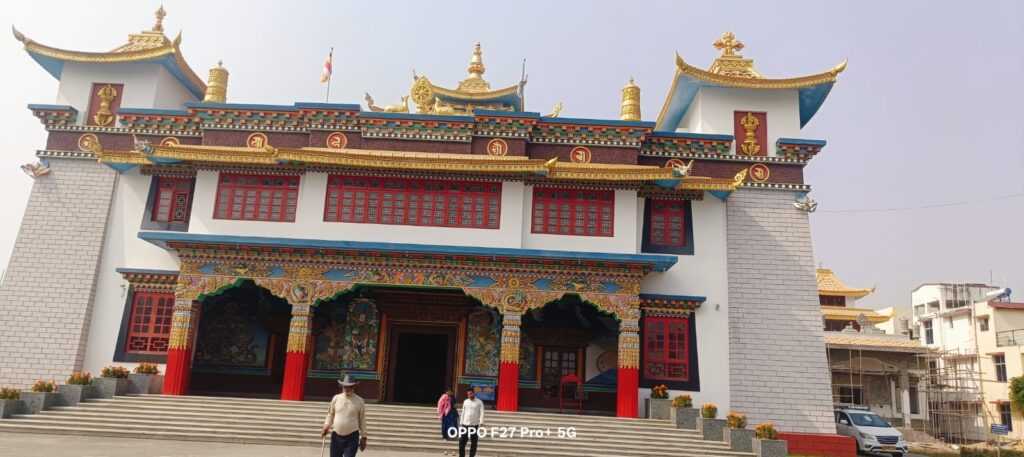
In Bodh Gaya, the newly constructed Padmasambhava Vihara temple of the Tibetan Nyingma Buddhist sect is a four-storeyed temple. The foundation of the Nyingma Buddhist monastery was laid by the Dalai Lama in 1998 and it was completed in 2008. The temple’s foundation was laid in 2019 and it was inaugurated on January 23, 2026. On the ground floor, there are statues of three forms of Lord Buddha, representing the Buddhas of the three times: Dipankara (past), Shakyamuni (present), and Maitreya (future).
This symbolizes the eternal continuity of knowledge across ages. On the second floor, there is a temple dedicated to Padmasambhava and Shantarakshita. Padmasambhava, also known as Guru Rinpoche, was a tantric Buddhist Vajra master who spread Vajrayana in Tibet around the 8th-9th century. The third floor is dedicated to Avalokiteshvara, and the fourth floor has a temple dedicated to Amitabha Buddha. This temple is an example of the localization of Tibetan Buddhism, integrating Indian, Tibetan, and Han architectural styles.
The walls are adorned with Thangka paintings, intricate patterns, and gold-coloured decorations. The colours and symbols hold deep religious significance, representing Buddhist teachings. This temple is a unique fusion of art, nature, spirituality, and centuries of tradition. It is filled with grand and mystical murals, prayer wheels, and statues of Buddha and other deities. The Nyingma Buddhist sect is the oldest Buddhist sect in Tibet. Its foundation was laid in the 8th century by Guru Padmasambhava under the patronage of King Khri-srong-lde-btsan. It was initiated by incorporating tantra into the existing Buddhist practices with some modifications. The literal meaning of Nyingma is ‘old’. Later, the sect was further developed based on the teachings of Guru Padmasambhava. It has considerable flexibility. Monks of this sect can also lead married lives. In Nyingma, all the teachings of Buddha were transformed into tantra, adopting Śrāvakayāna, Pratyekabuddhayāna, and Bodhisattvayāna as its vehicles. It has Buddhist monasteries in many countries, including Tibet. As the monks wear red hats, it is also called the Red Hat sect.
